Try Incompass free for 30 days. No credit card required.
Start Free Trial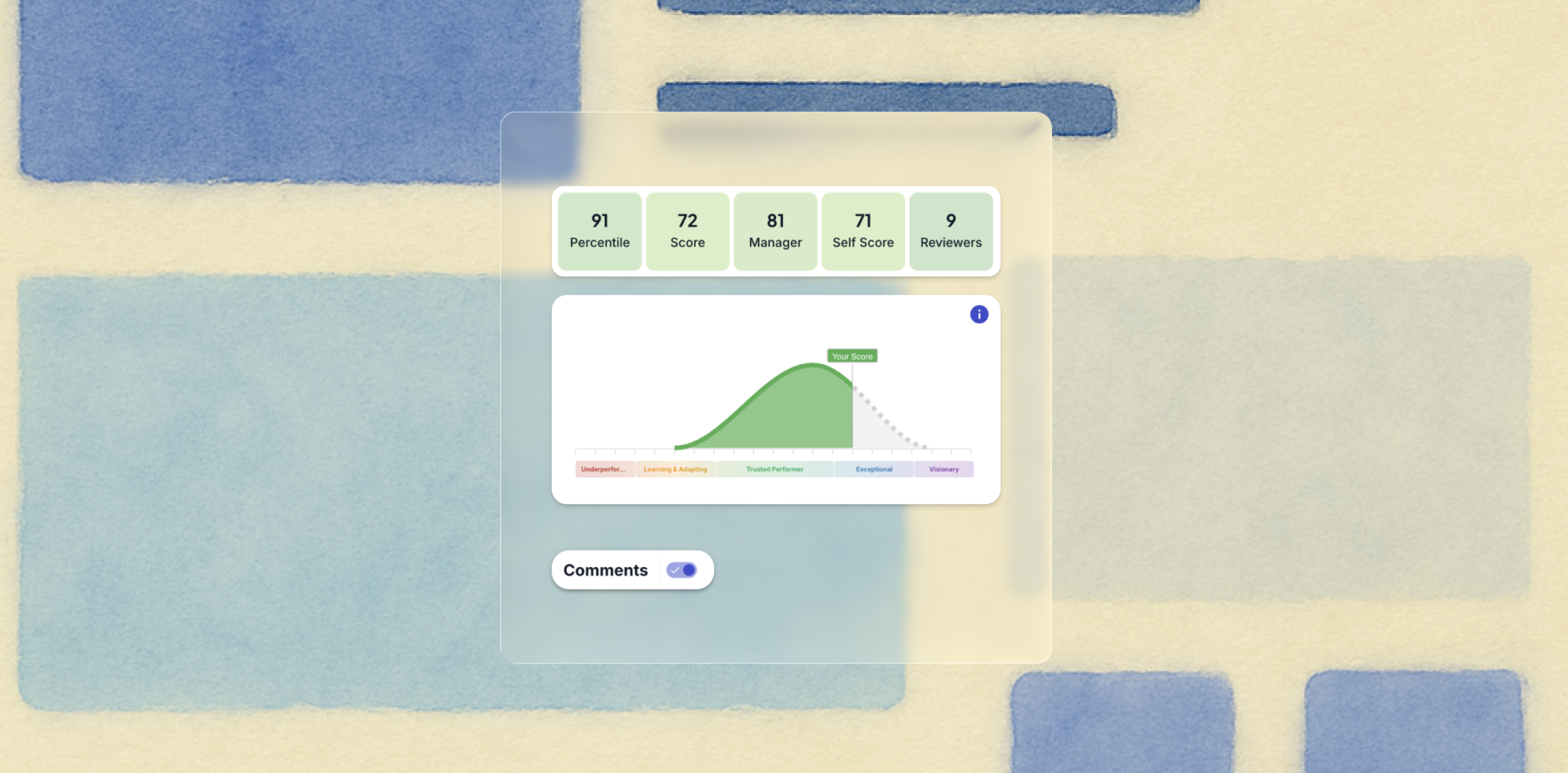


Private equity has always understood that value creation requires getting multiple things right simultaneously — buying well, financing appropriately, driving revenue growth, improving operations, and executing transformations that take the business somewhere it couldn't get to on its own. The industry's track record of applying rigor to each of those dimensions is well established.
Where there remains a significant and largely untapped opportunity is in the systematic visibility into the people executing the plan — particularly the leaders and teams below the C-suite who are doing the day-to-day work of making value creation happen. And that opportunity becomes available, fully, only after the deal closes.
During the diligence process, PE firms invest seriously in understanding the leadership teams they're acquiring. Experienced assessment firms are brought in. Structured interviews are conducted. References are checked. For C-suite hiring, firms like ghSMART or Korn Ferry conduct rigorous evaluations. The industry has built real capability here, and it shows.
But there is a hard ceiling on what diligence can tell you. You can interview the CEO and the senior leadership team, and you can bring in experienced assessors to evaluate the top of the house. What you cannot get is an independent, candid read on the broader organization. Sellers control what gets shared, and sensitive people data — internal feedback, performance history, honest assessments of who's struggling — is rarely offered up voluntarily before a deal closes. You also can't survey the organization without signaling that a transaction is underway. And even when data is provided, it was produced under the seller's oversight, which limits how much weight it can carry. The result is that the people two and three levels down, the ones who will be most directly responsible for executing the value creation plan, remain largely unknown — not because firms aren't trying, but because the diligence context simply doesn't allow for the kind of trust and candor that honest assessment requires.
What changes at close is that the aperture opens. For the first time, you have both the standing and the access to understand the organization at a depth that wasn't possible before. That is a significant opportunity — and one that most firms have not yet fully taken advantage of.
Two Demands Running Simultaneously in PE-Backed Companies
Portfolio companies are being asked to do two things at once during the hold period: keep the business running and improving at baseline, while simultaneously executing the value creation initiatives the deal was underwritten on. Those are distinct demands that often require different capabilities in different parts of the organization, and both need the right people in place to deliver.
Both demands are real and both are consequential. And according to Bain & Company's 2026 Global Private Equity Report, the stakes have never been higher. Generating a 2.5x MOIC and 20% IRR in today's environment — with borrowing costs meaningfully higher than a decade ago, lower leverage ratios, and purchase multiples in record territory — now requires roughly 10–12% average annual EBITDA growth over the hold period, compared to closer to 5% during the 2010s. As Bain puts it: "12 is the new 5." With that bar, there is very little room for the wrong people to be in the wrong roles for very long.
PE firms have built genuinely impressive infrastructure around shared visibility into financial and operating performance. Monthly reporting, operational KPIs across sales, inventory, and other key functions, board-level dashboards — the investment team and the C-suite are looking at the same numbers, having the same conversations, and making decisions together based on a common view of reality.
That same shared visibility rarely exists for talent. The investment team typically takes the C-suite's word for who is leading each value creation initiative and whether they are the right person for it. The broader organization — the managers running key facilities, the heads of regional sales teams, the leaders responsible for day-to-day execution of the initiatives that matter most — remains largely invisible until something goes wrong.
The data reflects this gap. A Bain & Company survey of PE professionals found that 92% said waiting too long to take action on talent issues had resulted in portfolio company underperformance — and nearly 70% said this had happened in at least half of their deals. McKinsey research reinforces the upside: organizations that align talent with their value agenda are more than twice as likely to outperform their peers, and achieve 2.5 times the ROI in their first year of ownership.
By the time misalignment surfaces in the financial and operating results, a year or more may already have been lost. At 12% required annual EBITDA growth, that is an extremely difficult position to recover from.
Closing this gap does not require building a new HR function from scratch or introducing a cumbersome annual review process. What it requires is extending the same consistency and intentionality that financial and operating performance already receives to the people driving those results — making talent a regular input to decision-making rather than something that only gets attention when a problem surfaces.
In practice, that means focusing on three things.
Creating shared data and insight on talent. Just as the investment team and the C-suite share a common view of the financial and operating metrics, they should share a common view of the talent that matters to the performance of the business. That means moving beyond qualitative impressions and operating partner relationships toward structured, consistent measurement that gives both sides the same clear picture to work from and respond to together.
Ensuring the right leader and team are in place for each value creation initiative. The value creation plan is the cornerstone of every PE investment — without a credible plan, the deal does not get approved. Each initiative within that plan deserves the same rigor applied to the people leading it as was applied to the financial thesis behind it. Who is leading this initiative? Do they have what it takes to deliver it in a PE-paced environment? What does the team around them look like? Getting clear answers to those questions at the outset — rather than assuming the C-suite has made the right calls — creates a genuine leading indicator of whether the plan is going to deliver.
Maintaining visibility into the right people in key roles across the broader organization. Beyond the value creation plan, there are roles throughout any portfolio company where having the right person matters enormously to baseline performance — regional leaders, functional heads, the managers who set the tone in critical parts of the business. Building visibility into those roles, and maintaining it consistently over the hold period, is what allows firms to catch problems early and make confident decisions before the financial and operating results make the decision for them.
Systematic post-close talent visibility remains far from standard practice across the industry. Most firms are working with some combination of operating partner relationships, periodic C-suite reviews, and the qualitative judgment of people who have limited bandwidth and line of sight into the full organization.
As Andy Caine, COO of Frazier Healthcare Partners, put it in a recent panel discussion on talent in private equity: "If you don't know there's a problem or where there's a problem, you don't have any leading indicators. You're just going to see financial underperformance 12 months from now when it's too late."
The firms that build systematic talent visibility into their post-close operating model — treating it with the same rigor and regularity they already apply to financial and operating performance — will be better positioned to execute value creation plans, make confident talent decisions earlier, and deliver the returns that today's environment demands. Ownership creates a talent visibility opportunity that diligence never can. The question is whether firms are making the most of it.
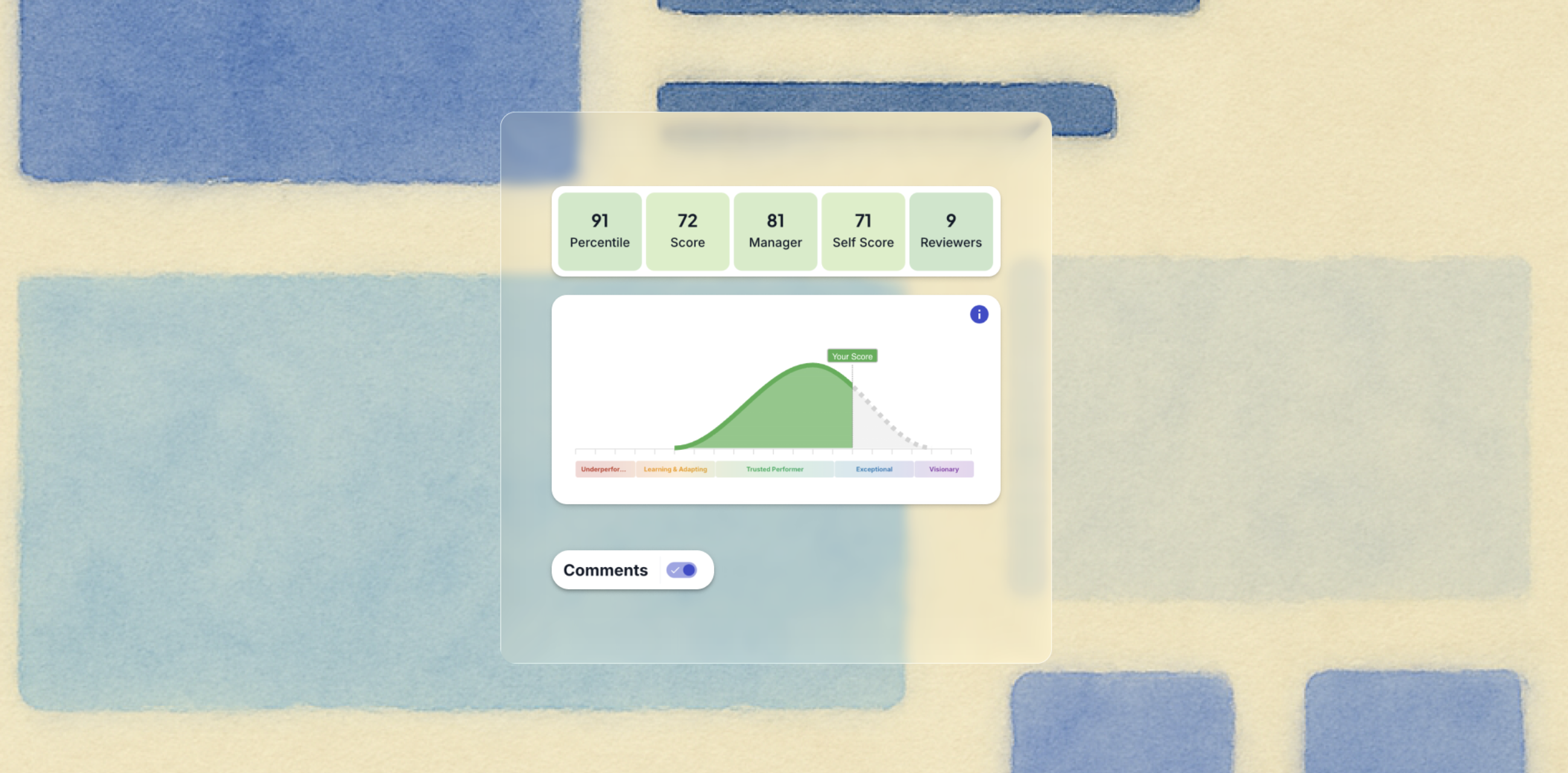
Incompass is a talent intelligence platform built for PE-backed environments, giving investment teams and portfolio company leadership shared, bias-adjusted visibility into how people are performing across the organization — without the overhead of a heavy HR process. Learn more about how Incompass works →
This post draws on insights from a recent panel discussion on talent measurement in private equity featuring Pete Fader, Wharton Professor and co-founder of Incompass, and Andy Caine, COO of Frazier Healthcare Partners. Watch the full conversation →