Try Incompass free for 30 days. No credit card required.
Start Free Trial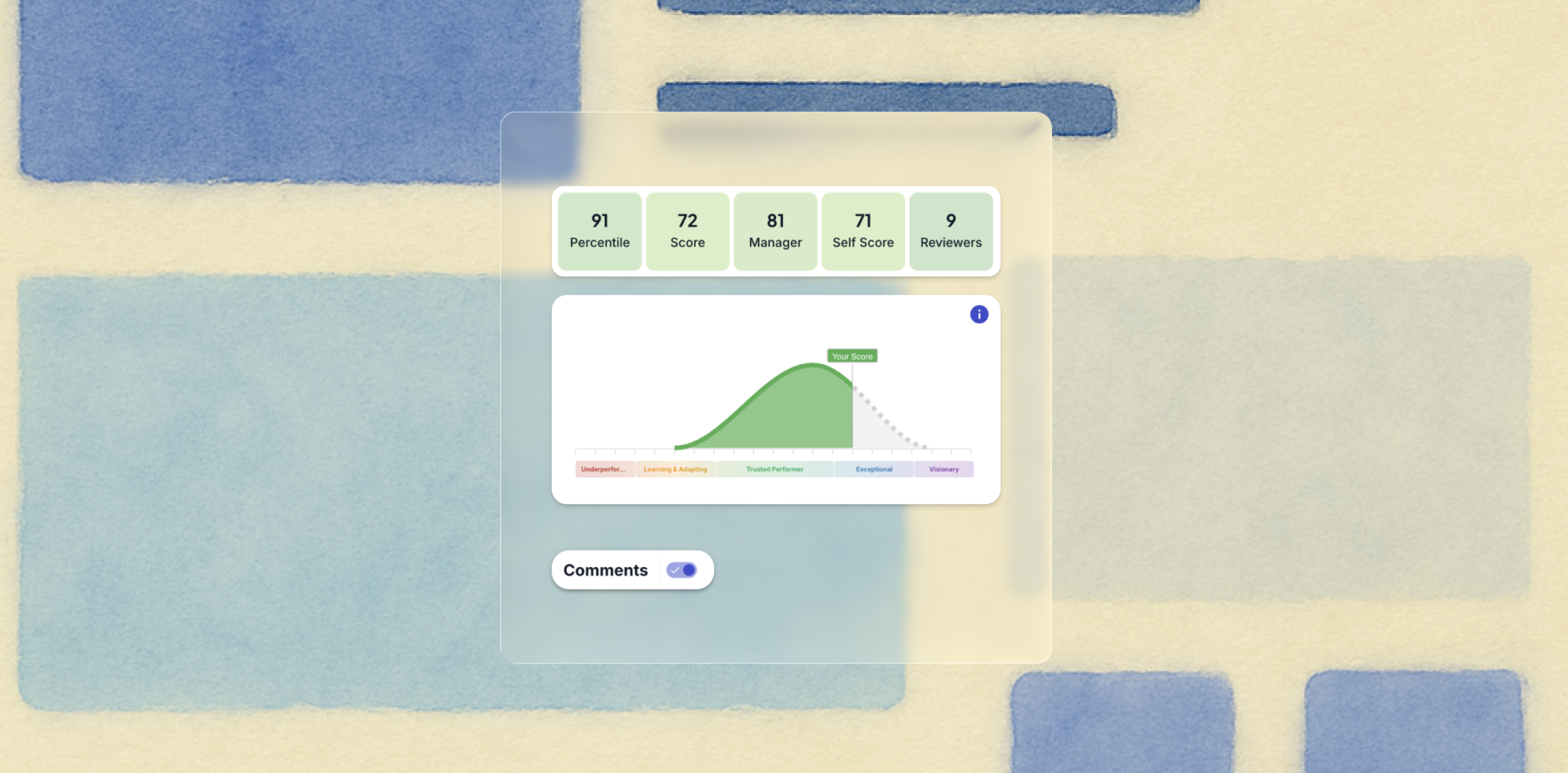


There's a particular kind of pressure that comes with being a leader inside a PE-backed company.
The business is moving fast, by design. Investors have a thesis. Operators have targets. And somewhere in the middle, you're being asked to make talent calls that directly affect whether the company hits its numbers.
A promotion that makes sense on paper but feels risky in practice. A restructuring where the data is thin and opinions are loud. A leadership gap that needs to be filled before the next board meeting.
These moments aren't edge cases. They're the job. And they carry a specific kind of weight that most frameworks weren't built for.
In a PE-backed environment, the stakes on talent decisions aren't abstract. A misjudged promotion, a delayed restructuring, a missed leadership signal - these show up in execution. And execution shows up in results.
Most leaders aren't struggling because they lack judgment or experience. They're struggling because they're making calls with incomplete visibility.
What they're typically piecing decisions together from:
When visibility is low, hesitation is rational. Decisions slow down - not because leaders are indecisive, but because they can't fully trust what they're seeing.
That's not a leadership problem. It's a visibility problem.
The instinct when confidence breaks down is to add structure. More documentation. Calibration sessions. Annual reviews. Additional processes to make decisions feel defensible.
In most companies, this already has diminishing returns. In a fast-moving PE-backed business, it actively works against you.
Information goes stale before it's reviewed. Participation becomes performative. And leaders still don't get the clarity they need at the moment decisions are being made.
The result is a paradox: more process, less confidence—and slower decisions across a business that can't afford to slow down.
When leaders hesitate before a high-stakes call, it's rarely because they want more data. It's because they don't have the right signals.
Real impact, not just output. Busy teams create noise. Impact creates progress. The leaders who make confident calls can see who actually moves work forward, not just who looks productive.
Patterns, not snapshots. Single data points mislead. Consistency over time, across peers, is what makes a decision feel grounded rather than reactive.
Signals that don't require a heavy lift. In high-velocity environments, anything that slows execution gets ignored or gamed. The signals that actually get used are lightweight, continuous, and easy to interpret.
Confidence comes from clarity, not from more data or more time.
Incompass gives leaders visibility into how people are actually experienced by their teams, not once a year, not through a heavy program, but through lightweight, bias-adjusted input that surfaces real patterns of contribution and leadership impact.
Instead of adding friction to execution, Incompass works in the background to surface:
Teams can start narrow—upward feedback, team health diagnostics, leadership signals—and expand only where clarity is needed. No company-wide rollout. No annual cycle. No added friction to a business that's already running fast.
When talent visibility is low, the damage tends to be quiet rather than dramatic.
High-potential employees stall or disengage before anyone notices. Attrition surprises the business. Responsibility lands on the wrong people. And over time, teams lose trust in how decisions get made—which is its own kind of execution risk.
Most talent mistakes in PE-backed companies aren't dramatic failures. They're slow, compounding misjudgments made under pressure with incomplete information.
The best leaders in high-pressure environments don't become confident at the moment of choice. They build confidence upstream, by ensuring they can see real impact clearly, consistently, and without friction.
That visibility is what makes it possible to move quickly and call it right.
Better talent decisions don't require slowing the business. They require seeing clearly before it matters most.
Curious to see Incompass in action? Schedule a demo and see for yourself.