Try Incompass free for 30 days. No credit card required.
Start Free Trial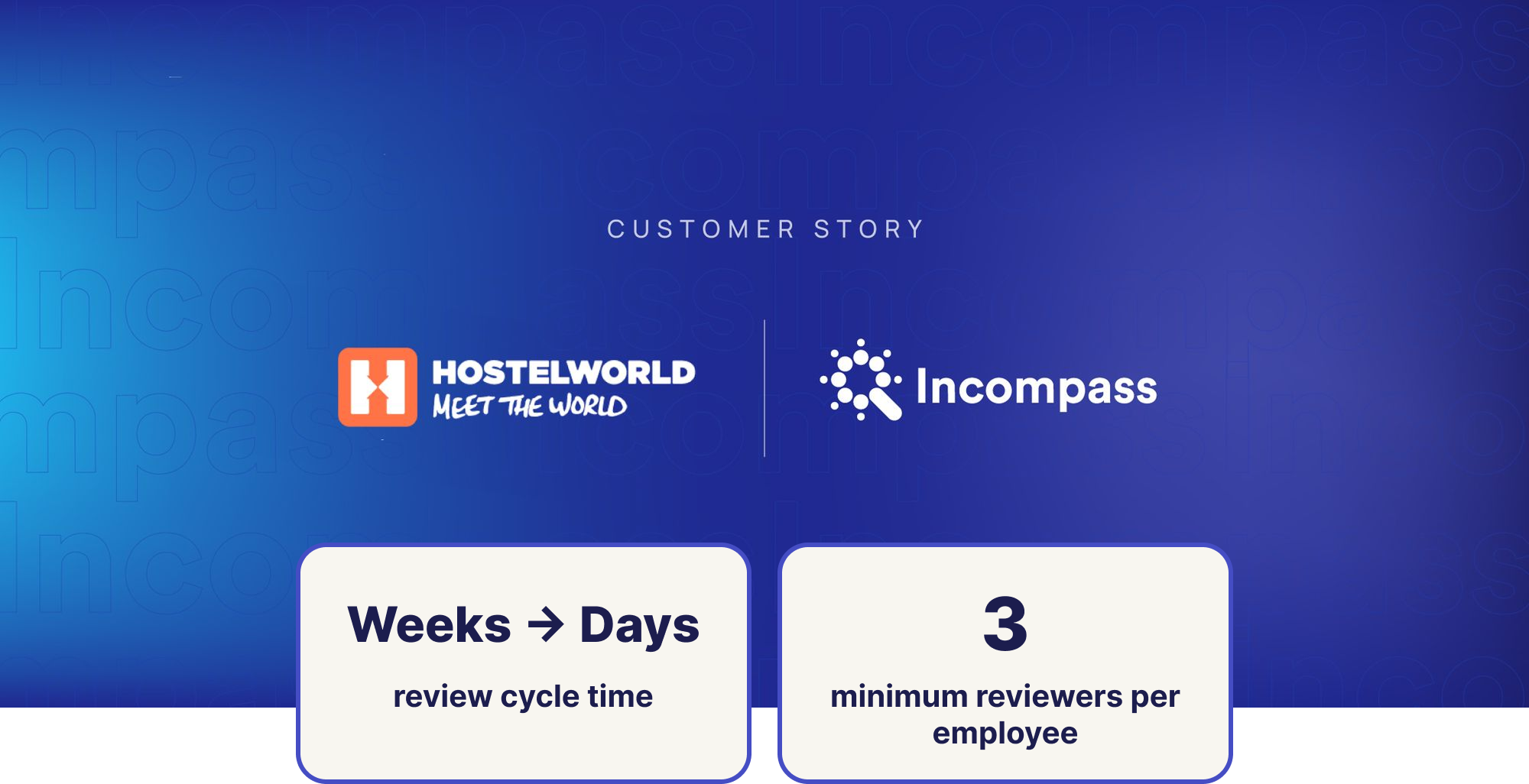


Turning a bold strategy into reality required more than a compelling vision, it required changing how people worked and how expectations were reinforced day to day.
As Hostelworld evolved from a hostel-booking platform into one focused on fostering social connection, leadership recognized that internal culture needed to evolve alongside the business.
Founded in 1999 as an online travel agent focused on hostels, Hostelworld emerged from the COVID pandemic into a changed world. CEO Gary Morrison observed both a renewed interest in travel and a growing epidemic of loneliness. He saw an opportunity to serve a deeper human need: helping people connect while traveling.
To support this shift, the organization needed to become more agile, more willing to take risks, and more interdependent. That meant culture could not live only in values statements, it needed to be reinforced through everyday practices and shared accountability.
To embed culture more intentionally, Morrison partnered with Incompass to redesign how feedback and peer perspectives were gathered across the company.
Rather than relying solely on top-down assessments or infrequent evaluations, the organization implemented a more inclusive and structured process that enabled employees at multiple levels to reflect on how work was being done — not just what was being delivered.
This shift reinforced an important principle: culture was not owned by leadership alone. Every employee played a role in shaping and reinforcing it.
Traditional 360° processes can suffer from bias. Employees may select favorable reviewers, and peers may hesitate to provide candid input.
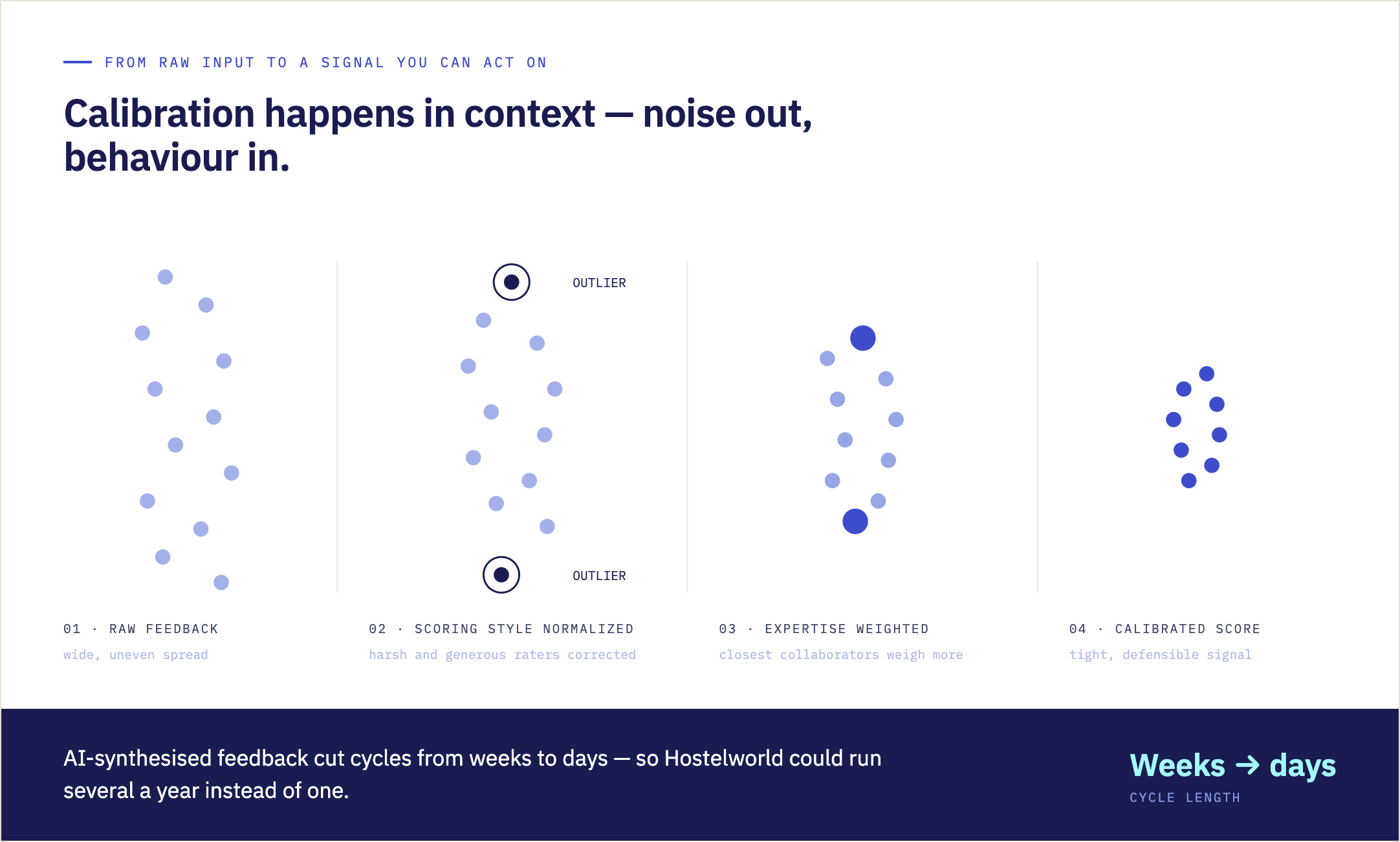
Hostelworld addressed these challenges by requiring a balanced mix of perspectives. Each employee was reviewed by at least one manager, one peer, and one direct report. Once feedback was submitted, Incompass calibrated inputs in context, accounting for scoring variability, weighting expertise, and identifying statistical outliers.
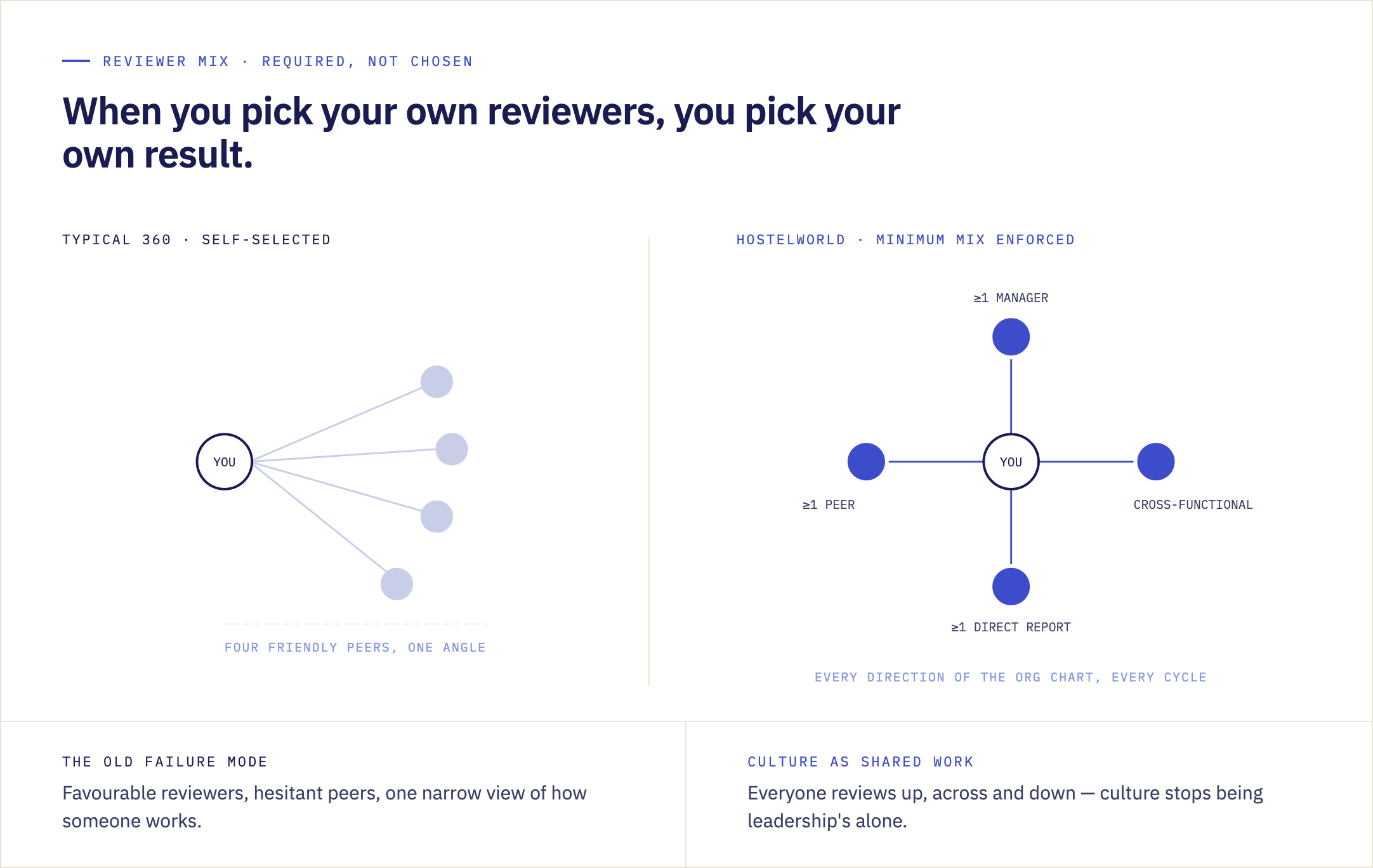
This approach reduced bias and increased confidence in the fairness of the process.
Rather than evaluating abstract traits, Hostelworld centered assessments around specific, observable behaviors, such as data-informed decision-making and supporting others’ growth.
Grounding discussions in concrete behaviors made expectations clearer and conversations more actionable. Employees gained a better understanding of what the company’s evolving culture looked like in practice.
Using AI to synthesize and summarize feedback significantly reduced the time required to complete review cycles. What previously required weeks could be completed in days.
This efficiency made it possible to conduct multiple cycles per year, creating a more responsive organization. Leaders could recognize contributions more quickly, and employees received timely insight into how their behaviors aligned with expectations.
Research from Gartner shows that while most leaders change what they say when attempting to shift culture, far fewer change how work actually happens — even though operational changes have the greatest impact.
By redesigning a core people process, Hostelworld translated cultural ambition into daily practice. The shift demonstrated that culture-building is not driven by slogans alone, but by systems that shape how people collaborate, reflect, and grow.
Curious how you could reinforce culture through structured feedback and accountability systems? Schedule a chat to learn how Incompass helps organizations operationalize culture at scale.