Try Incompass free for 30 days. No credit card required.
Start Free Trial


Marketing solved a version of this problem decades ago: how do you tell a genuinely valuable customer from one that just looks good on a monthly report? Pete Fader — Wharton professor and Incompass co-founder — joined The Modern People Leader's Build series to make the case that the same "customer-based audit" thinking marketers use should be applied to employees, and to walk through what that actually looks like in practice.
The episode opens with the crossover: concepts like customer lifetime value have a direct, underused analog in HR. If you can model which customers are worth investing in and why, you can do the same for employees — most companies just aren't set up to try.
Stripped of jargon, a customer-based audit is a structured way of separating signal from noise in how a person (or customer) shows up over time — not a single snapshot, but a trend. Applied to employees, it produces something closer to a real performance trajectory than a single review score.
Before we start projecting into the future, before we have any forecast or models or Greek letters or anything complicated, [a customer-based audit] let's understand what we have…from the data that's sitting in front of us
— Professor Peter Fader
One of the sharper points in the conversation: judging people (or customers) by a single average obscures more than it reveals. Cohort analysis — tracking how a group changes together over time — surfaces patterns that a cross-sectional snapshot just can't.
So, as we're recording this, we're right in the middle of the holiday season. This is the time when most companies acquire their very worst customers [but when we compare cohorts acquired at different points in the year] we find out that those Q4 customers are not so good. They don't buy very often.
— Professor Peter Fader
This isn't a theoretical exercise — the conversation gets specific about the data an organization needs to have in place, and why incentive-compatible peer feedback (asking people questions in a way that rewards honesty rather than diplomacy) is the piece most companies are missing.
If we can come up with ways to do [measure people's performance] in ways that are simple but effective and comparable across people, across groups, over time, then we could start to play the audit game [with employees]
— Professor Peter Fader
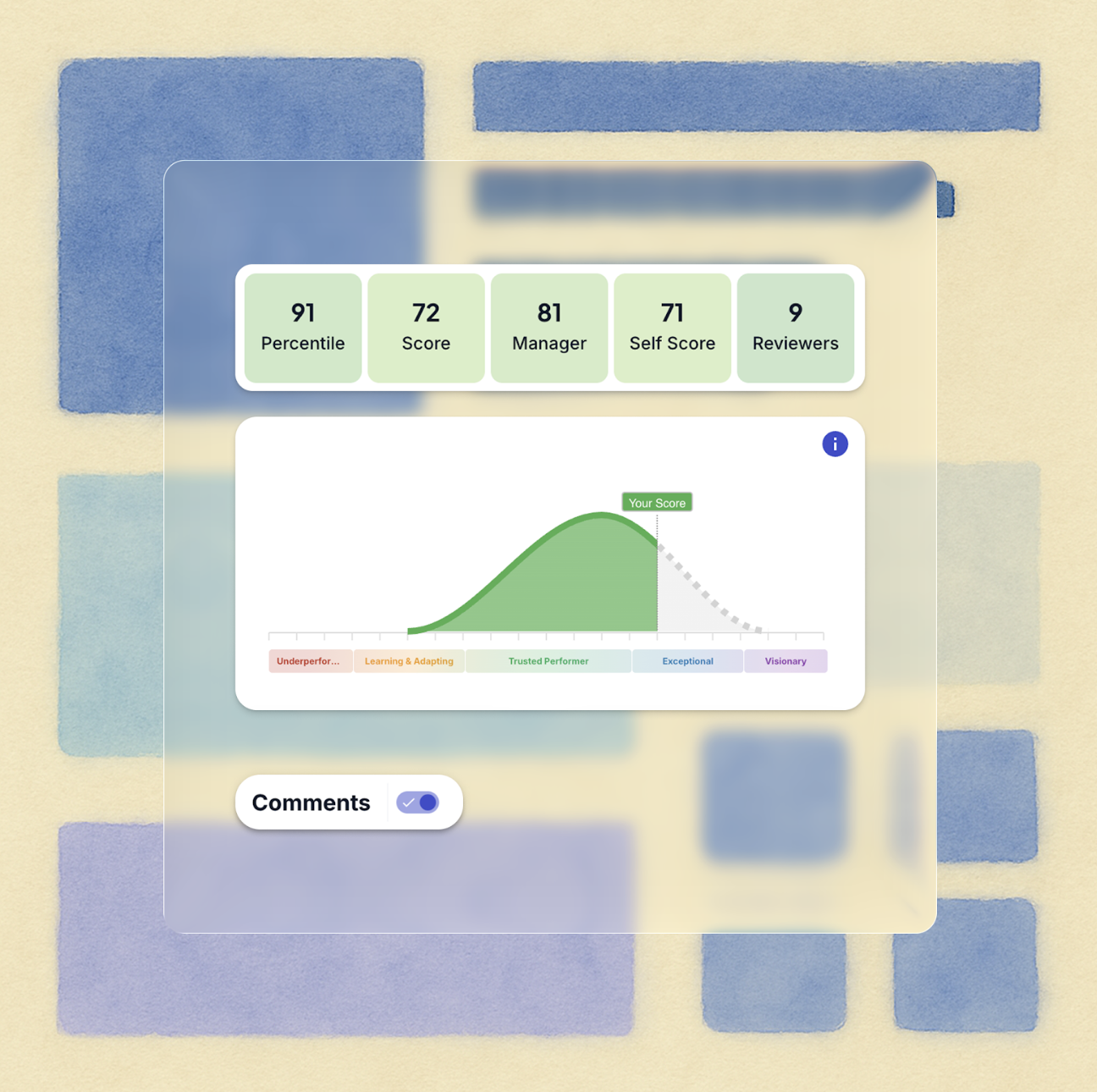
The back half of the episode turns practical: what an employee-based audit actually outputs, and how leaders turn that into real decisions — not just a dashboard nobody opens.
Being able to see who is a top performer is really helpful. And there are lots of tools out there that help you get a much clearer view on [this]. What I think the customer base audit really helps you out with is understanding a little bit more about why.
— Jessica Zwaan
The full 56-minute conversation goes deeper into cohort analysis, the limits of employee surveys, and what the future of work looks like if employee audits become as standard as customer audits already are.
🎧 Listen to the full episode on Spotify →
Want the employee-based audit, built in? See how Incompass works →